Let’s be honest. When most people think of China, they picture the Great Wall or Shanghai’s futuristic skyline. But if you are in the business of buying and selling physical products, there is another city that deserves your attention: Yiwu International Trade City, and for that specific place, we have this Yiwu city guide.
Yiwu is not glamorous. It is not a tourist playground. For a complete overview of how the market works, start with our Yiwu City Guide before planning your trip. But it is the undisputed king of small commodity trade. Every year, tens of thousands of buyers from over 200 countries land here, armed with nothing but a product list and high hopes.
This isn’t a generic Yiwu travel guide written by someone who flew in for a weekend. I’ve walked all the booths, missed a connecting train once because I underestimated the walk from the market to the station, and haggled badly on my first trip because I didn’t know to ask about MOQ first. Think of this as your honest map, not a brochure. If you’re searching for a Yiwu China travel guide that skips the fluff and gets into the actual logistics, you’re in the right place.
Where Is Yiwu and Why Does It Matter?
Yiwu sits in Zhejiang province, roughly halfway between Shanghai and Hangzhou. Thanks to China’s incredible high-speed rail network, you can zip from Shanghai Hongqiao to Yiwu in about 90 minutes. The Yiwu high-speed rail Shanghai Hongqiao route is genuinely one of the easiest parts of this whole trip. That’s the kind of detail a proper Yiwu city guide should cover before you even book the train.
Why does location matter?
Location matters because Yiwu is the logistical heart of small commodity trade, not just another city on the map in Yiwu, Zhejiang, China. Think Christmas decorations, fake flowers, jewelry, toys, party supplies, and thousands of other knickknacks you see on Amazon and in dollar stores.
Why Is Yiwu Popular Among Global Buyers?
The main event is the Yiwu International Trade City, which locals simply call Futian Market. Imagine 75,000 booths spread across six massive districts (yes, six; more on that below), each specializing in completely different product categories. You could walk for a full week and still miss things.
This is why so many people searching for a Yiwu, China, travel guide keep coming back to the same advice: you do not “browse” this market. You conquer it with a plan. The city has built an entire export ecosystem around this market, with freight forwarders, translators, hotels, and restaurants all existing to serve buyers like you. For a deeper breakdown of what’s inside each section, our Yiwu Market Districts page covers the layout in detail.
How to Get to Yiwu?
Getting into Yiwu itself is the easy part of this whole trip. It’s the getting-around-once-you’re-there part that trips people up. Any decent Yiwu city guide will tell you the same thing: don’t overthink the train from Shanghai or Hangzhou. Here’s how buyers actually arrive.
| From | Best Option | Travel Time |
| Shanghai (Hongqiao) | High-speed train | ~90 minutes |
| Hangzhou (East) | High-speed train | ~1 hour |
| Guangzhou | Flight, or train with a transfer | 3-5 hours |
| International | Fly direct into Yiwu Airport (visa-free eligible) | Direct |
If you’re coming from Shanghai or Hangzhou, don’t overthink it. The high-speed train is faster than dealing with a flight and airport transfers, and it drops you close to the market. Coming from Guangzhou, especially if you’re stacking a Yiwu trip onto a Canton Fair visit, a direct flight usually beats the train once you factor in the transfer at Hangzhou or Nanjing. If a Canton Fair leg is part of your plans, our rundown of common Canton Fair mistakes is worth a read before you land.
And if you’re flying in internationally, Yiwu International Airport is now a recognized entry point for the visa-free transit policy, so a lot of buyers skip the bigger-city layover entirely and fly straight in.
Yiwu Market Districts at a Glance
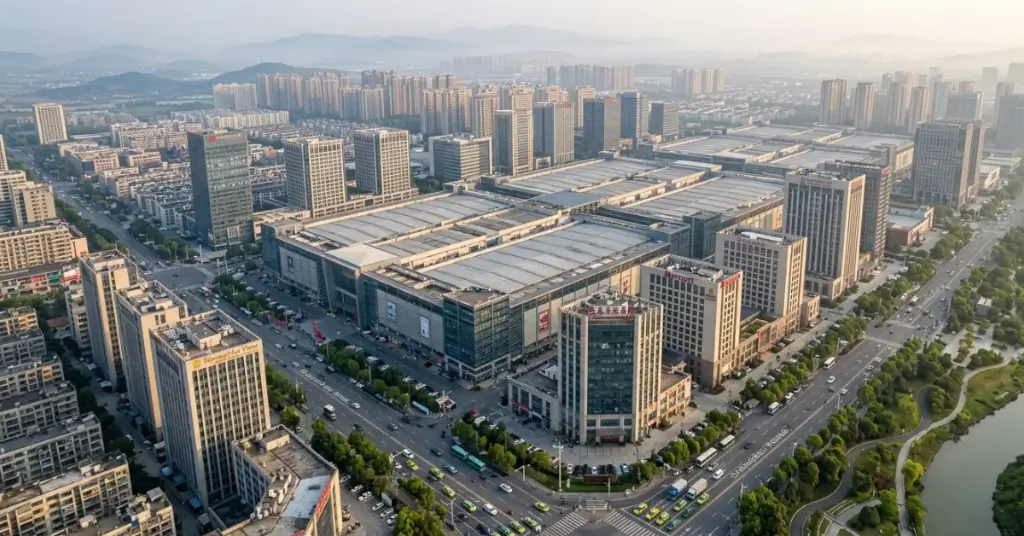
Here’s something that trips up even buyers who’ve done their homework: Yiwu used to have five districts. Not anymore. District 6 opened in October 2025, and it’s already pulling in buyers who sell trend-driven, online-first products; think smart gadgets and skincare, not just toys and trinkets.
If you’re building your route through the market, use this table as your cheat sheet before you land.
| District | Main Product Categories |
| Yiwu Market District 1 | Jewelry, small accessories, artificial flowers, toys, gifts |
| Yiwu Market District 2 | Bags, luggage, hardware, tools, umbrellas, locks |
| Yiwu Market District 3 | Stationery, cosmetics, sports goods, arts and crafts, office supplies |
| Yiwu Market District 4 | Household goods, electronics, textiles, machinery parts, daily use products |
| Yiwu Market District 5 | Imported goods, food products, bedding, textiles from abroad |
| Yiwu Market District 6 | Fashion jewelry, skincare and beauty, baby products, smart devices (drones, AR/VR), home living goods |
Basically, if you’re sourcing something trend-driven with strong online sales potential, District 6 deserves its own half-day. Older guides won’t mention it because it simply didn’t exist when they were written, one more reason to double-check anything you read about the Yiwu wholesale market districts before you land.
Planning your first sourcing trip? Read our Yiwu Sourcing Mistakes guide to avoid costly mistakes before you visit the market.
What to Expect When Visiting Yiwu?
Yiwu is not a beautiful city. The air can be hazy, the streets are busy, and nobody speaks much English. But for the right kind of traveler, none of that matters. A good Yiwu city guide prepares you for this reality.
Business-Oriented City
From 8:00 AM, the streets fill with trolleys stacked high with samples. You will see buyers rushing between buildings, sipping cold coffee, and negotiating deals before noon. It is intense, purposeful, and oddly exhilarating.
International Buyer Presence
One of my favorite things about visiting Yiwu is the diversity. You will hear Arabic, Spanish, Russian, and French before you hear English. The halal restaurants on Santing Road are packed with buyers from the Middle East and Africa. It is a genuine global crossroads, just without the museums.
Fast-Paced Trade Environment
The market opens early, around 8:00 AM, and starts shutting down by 4:30 PM. If you’ve been searching for Yiwu market opening hours, that’s basically it. Vendors do not stay late. Neither should you. This means your days need to be ruthlessly efficient.
Is Yiwu Safe for Foreign Buyers?
Yes, and it’s honestly one of the more relaxed parts of the trip. Petty theft happens the way it does in any busy commercial city, so keep an eye on bags in crowded aisles, but violent crime against foreign buyers is rare. Local authorities are used to international visitors, and the market itself is heavily monitored.
How to Plan Your Trip to Yiwu?
Planning a Yiwu trip comes down to three things: sorting your visa, understanding how payments work on the ground, and staying connected once you land. This is the part most buyers skip in a rushed Yiwu City guide: sorting the visa question before anything else. Here’s each one, straight, no filler.
Do I Need a Visa to Visit Yiwu in 2026?
As of 2026, China’s 30-day visa-free entry policy covers 50 countries, including the UK and Canada, added in February 2026, and it runs through December 31, 2026. If your country is on that list, you don’t need to apply for anything before a short sourcing trip.
There’s also a separate option: Yiwu visa-free transit gives eligible travelers 240 hours, that’s 10 full days, across 60 entry ports in 24 provinces. Yiwu International Airport visa-free entry is included too, so you can fly straight in without routing through a bigger city first.
If you’re staying longer than these windows allow, or you’re a nationality not covered by either policy, you’ll still need a proper business visa. Your hotel or a sourcing partner can provide an invitation letter for that. The US State Department China Travel Advisory is worth a read regardless of which route you take, since it covers entry requirements, local laws, and embassy contacts every buyer should know before traveling.
Currency and Payments in Yiwu
Cash is still useful, but WeChat Pay and Alipay dominate the whole city. Download one of them before you arrive. Your foreign credit card will not work at most market stalls, so don’t rely on it as a backup plan.
Staying Connected in Yiwu

Google, WhatsApp, and most Western apps are blocked in mainland China, so a VPN is close to mandatory if you need to stay in touch with your team back home. For SIM cards and internet access, an eSIM bought before departure is the easiest route; there’s no need to hunt down a local shop on day one.
Inside the market itself, WeChat is the default communication tool with suppliers, so set that up early too. It’s how invoices, photos, and follow-up questions actually get handled once you’re back home.
Plan your Yiwu visit with expert support. Get help navigating Yiwu as a buyer from Kingsler today.
Best Time to Visit Yiwu Market
The best time to visit is late March through May or September through early October, when the weather is mild and you avoid both the Chinese New Year shutdown and the October trade fair crowds. If there’s one thing every Yiwu city guide should get right, it’s steering you away from the Chinese New Year shutdown.
Weather and Seasons
Yiwu has a mild four-season climate, so most months are workable. Average temperatures sit around 17°C (63°F) for the year. July is the outlier: genuinely hot and sticky, often pushing past 30°C (86°F) with high humidity. January brings a real cold snap too, down into single digits Celsius.
If you have flexibility, spring and autumn give you the most comfortable working conditions without the extremes of either end.
Market Closures and Peak Crowds
Chinese New Year shuts a huge chunk of the market down for two to three weeks. Vendors go home, and a lot of them don’t reopen right away. If your trip dates land anywhere near it, check the exact closure window before booking flights.
The China Yiwu Commodities Fair pulls in extra crowds every October too, which is great for atmosphere but tough on hotel prices and quiet negotiating time. Between the two, it’s worth planning your dates around both rather than walking into either unprepared.
How Much Does a Trip to Yiwu Cost?
For a solo buyer on a 4-5 day trip, plan on roughly $600-1,200 total outside of flights, with flights being the biggest variable depending on where you’re coming from. Most cost breakdowns in a typical Yiwu city guide leave out sourcing agent fees, so we’re including them here.
- Flights: varies wildly by origin, but budget for a standard international economy fare plus the short domestic leg or high-speed rail transfer
- Hotels: budget 3-star options run around $50/night, 4-star business hotels sit around $70/night, and 5-star options like the Shangri-La run around $110/night and up
- Food: genuinely low. A bowl of noodles costs less than three dollars, and even a proper sit-down meal rarely breaks the bank
- Local transport: taxis start around 8 RMB, so getting around all week costs very little
- Sourcing agent fees: varies by scope, from a single day of market guidance to full negotiation and quality inspection
Flights and hotels dominate the budget for most first-time buyers, and everything on the ground is cheap by comparison. That’s actually one of the reasons Yiwu works so well for buyers who are still testing a product category before committing serious money.
Where to Stay in Yiwu?
Where to stay near the Yiwu market is a simple decision because almost everyone wants the same thing: proximity to the market. Proximity to the market is the one rule every Yiwu city guide agrees on.
Business Hotels Near Market
The Holiday Inn Yiwu Center is a favorite among people searching for the best hotels near Yiwu International Trade City, running around $70/night. It is clean, reliable, and about a ten-minute drive from Futian Market. They also serve a solid breakfast from 6:30 AM, which matters when you are trying to beat the crowds. You can read real buyer reviews on Trip.com before booking.
Budget vs Premium Options
If you are on a tight budget, look for 3-star hotels near the Binwang Passenger Transport Center, typically around $50/night. They are cheaper, smaller, and totally fine for a short trip. On the high end, the Shangri-La runs $110/night and up, with facilities like meeting rooms and fast
What to Eat in Yiwu?
You will not starve. In fact, you might eat surprisingly well, and figuring out what to eat in Yiwu is honestly one of the more fun parts of the trip.
International Restaurants
Head to Santing Road for Middle Eastern food. The lamb kebabs, hummus, and fresh bread are excellent, and Santing Road Yiwu restaurants stay open late, which is perfect after a long day of negotiating. You’ll also find Turkish, Indian, and African options scattered through the same strip, a byproduct of just how many nationalities pass through this market every week.
Local Chinese Cuisine
Try Yiwu brown sugar. It is a regional specialty and surprisingly addictive. For a proper meal, find a restaurant serving Donghe meat patties. They are crispy, juicy, and cheap. If you want something heartier after a long walking day, a Zhejiang-style hotpot dinner is an easy, forgiving option; point at what you want, and the broth does the rest.
Buyer-Friendly Dining Options
Most Western-style business hotels have restaurants with familiar options. But honestly, step outside. A bowl of noodles from a small shop costs less than three dollars and tastes far more authentic, and most street-level spots near the market are used to foreign buyers, so don’t expect an English menu, but do expect the staff to point and gesture patiently until you land on something good.
Getting Around Yiwu Without Speaking Chinese
Getting around without much Chinese is easier than it sounds: Didi, taxis with your destination written down, and walking inside the market cover almost everything you’ll need.
| Option | Typical Cost | Best For | Notes |
| Taxi | From ~8 RMB | Short hops between hotel and market | Have your destination written in Chinese on your phone |
| Didi (ride app) | Similar to taxi | Anyone without much Chinese | Use the English version of the app |
| Local bus (121, 122, 123) | Very cheap | Budget travelers with time to spare | Slow and confusing for first-timers |
| Walking within the market | Free | Moving between nearby districts | The complex is bigger than it looks on a map |
Distance and Travel Time
From Yiwu Airport to the city center is roughly 30 minutes. From the train station to the Holiday Inn is about 20 minutes. If you’re arriving by rail and wondering about the Yiwu train station to Futian Market trip specifically, budget a similar window. The market is central, so most hotels are within a short drive of it either way.
Business Culture and Tips for Buyers
Do not walk in like a tourist; walk in like a buyer who knows the etiquette, the language workaround, and the payment terms before you land.
Basic Negotiation Etiquette
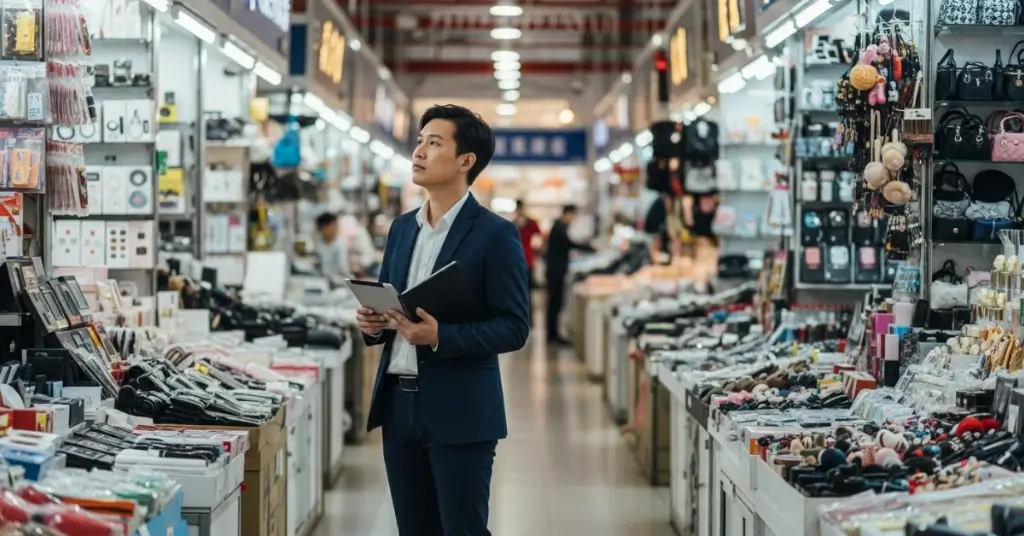
If you’ve been searching for Yiwu shopping etiquette / bargaining tips, here’s the honest version: haggling is expected, but do not start with a silly lowball. Ask about the minimum order quantity for your product category first. Then ask about price breaks. Then negotiate. Suppliers respect buyers who understand the game.
Communication Tips
English is limited inside the market stalls. Pleco or Google Translate’s camera mode handles most on-the-spot menu and label translation, but for real negotiation, a translation app only gets you so far. Better yet, work with a Yiwu sourcing agent who speaks Mandarin and understands the product categories you are sourcing.
Payment Expectations
The standard is a 30% deposit upfront to start production and the 70% balance before shipment. This split exists for a reason: it protects both sides. The supplier gets working capital to start your order, and you keep leverage until the goods are actually ready to ship.
Be very careful about paying 100% upfront. Reputable suppliers will not ask for that, and if one does, treat it as a red flag rather than a negotiating quirk. If a supplier insists on unusual terms, that’s exactly the kind of thing a Yiwu sourcing agent or a quality inspection before final payment can help you catch before money moves.
Common Challenges Buyers Face in Yiwu
Let’s be real: visiting the Yiwu market in China comes with headaches. Here’s what actually trips people up and how to handle each one.
- Language barriers: Google Translate works, but offline packs are better. Market Wi-Fi can be spotty.
- Navigation issues: Six districts, 75,000 booths total. Getting lost is guaranteed at least once, so keep the district table from earlier bookmarked and stick to your target zones rather than wandering.
- Supplier communication: Vendors assume you understand shipping, lead times, and quality standards. Running a proper Yiwu quality inspection before shipment protects you from receiving wrong or defective goods.
- Time management: Jet lag plus early market hours is a brutal combination. Block your first morning for nothing but the market, and push meetings, calls, and admin to the afternoon once the market slows down after 4:30 PM.
None of these are dealbreakers; they’re just the reason so many buyers bring an agent along instead of figuring it out solo on their first trip.
Shipping Your Goods Out of Yiwu
Buying the goods is only half the job. Getting them home is the part people underestimate.
Most export cargo out of Yiwu routes through Ningbo or Shanghai ports, depending on your freight forwarder’s setup and your shipping volume. If you’re combining smaller orders from multiple suppliers, Yiwu consolidation shipping is the standard way to avoid paying full container rates for a partial load. Our consolidation service handles exactly this.
Timelines depend on the destination port and season, but plan for roughly 25-40 days for standard ocean freight once goods leave the factory, longer if you’re relying on multiple consolidation pickups first. Our China Shipping Logistics Service walks through this from pickup to final delivery, so you’re not guessing at lead times when you’re quoting your own customers back home.
Don’t overlook customs paperwork either. Commercial invoices, packing lists, and clearance on the receiving end trip up first-timers more often than the shipping itself. Our China customs clearance service covers exactly this part, so goods don’t sit stuck at port while you scramble for the right documents.
Tips for a Smooth Yiwu Visit
A few habits separate buyers who leave with solid orders from buyers who leave exhausted and empty-handed.
- Plan meetings in advance. Use platforms like Chinagoods or Alibaba to find vendors and book appointments before you arrive, so your days are built around confirmed stops instead of walk-in luck.
- Set a daily target of 3 to 5 suppliers. Trying to see everything leads to analysis paralysis and a sore back by day two. Pick your must-see booths the night before and stick to the list.
- Confirm samples before you leave each booth. A quick photo and a written note of the price, MOQ, and lead time saves you from mixing up suppliers once you’re back at the hotel.
- Keep your afternoons lighter than your mornings. The market slows down after lunch, which makes it the better window for follow-up calls, sample review, and logistics planning rather than fresh browsing.
Once your orders are placed, our deep logistics guide walks you through everything from factory pickup to final freight so you know what to expect before goods even leave Yiwu.
Recommended Read: How to load containers in Yiwu
Role of a Yiwu Sourcing Agent
A good sourcing agent handles three things buyers struggle with most on their own: knowing where to look, negotiating without the foreigner markup, and getting your goods shipped without babysitting the process.
- Local market knowledge: We know which of the six districts has the strongest quality for your product category and which sections lean toward knockoffs, so you’re not guessing your way through 75,000 booths.
- Supplier coordination: We vet factories, negotiate prices, and handle communication so you don’t get overcharged simply for being a foreign buyer.
- Logistics support: Need to consolidate ten small orders into one container? Our China Shipping Logistics Service handles that from start to finish.
If you’d rather have boots on the ground than figure this out solo on your first trip, Kingsler can map out your visit before you land.
Yiwu vs Other Sourcing Options
Yiwu isn’t the right fit for every product or every stage of sourcing. Here’s how it stacks up against the main alternatives, so you know when to choose it and when to look elsewhere.
| Comparison | Choose Yiwu For | Choose the Alternative For |
| Yiwu vs Guangzhou for sourcing | Small, cheap, high-volume consumer goods | Guangzhou wins for large commodities, furniture, and heavier manufacturing |
| Yiwu vs Shenzhen sourcing | Plastic toys, socks, holiday decorations, party supplies | Shenzhen is the better call for drones, phones, and electronics |
| Yiwu vs Canton Fair | Year-round sourcing with smaller batches welcome | Canton Fair only runs twice a year, so timing has to line up with the event dates |
| Yiwu vs Alibaba sourcing | Touching products and comparing quality across booths in person | Alibaba is faster for simple reorders once you already trust a supplier |
| Yiwu market vs online sourcing | Building real supplier relationships before you commit | Online works fine for repeat orders, not for first-time vetting |
If you’re still narrowing down what fits your product line, our Yiwu Product Sourcing categories break down exactly which option matches what you’re selling.
Sample 3-Day Yiwu Sourcing Itinerary
Three full days is the honest minimum for a focused first trip if you’re asking how many days you need in Yiwu.
| Day | Districts | Focus | Evening |
| Day 1 | District 1 and District 2 | Jewelry, toys, bags, hardware | Santing Road for dinner |
| Day 2 | District 3, District 4, and District 6 | Stationery, hardware, home goods, smart devices | Rest early, long walking day |
| Day 3 | — | Follow-ups: negotiation, sample confirmation, logistics planning | Wrap up with your sourcing agent or freight forwarder |
If three days still feels tight for your product list, a Yiwu sourcing agent can help you compress this further by pre-scouting suppliers before you land.
Who Should Visit Yiwu?
Yiwu is worth the trip if you’re an importer, e-commerce seller, wholesaler, or first-time buyer ready to see where your products actually come from.
- Importers looking to diversify beyond Alibaba explore our Product Sourcing Service to see how Kingsler connects buyers directly with verified Yiwu suppliers.
- E-commerce sellers on Amazon, eBay, or Shopify hunting for trending, low-cost inventory: If Amazon is your main channel, our Amazon FBA Prep Service picks up right where sourcing leaves off.
- Wholesalers who want to cut out middlemen and buy closer to factory price.
- First-time buyers who feel ready to see where their products actually come from before committing to a supplier long-term.
Yiwu isn’t for a beach-and-cocktails trip; it’s for buyers ready to build a real supply chain. Whichever category fits you, understanding Yiwu product sourcing for your specific category can save you weeks of trial and error. You, understanding specific product sourcing, can save yourself weeks of trial and error.
Final Thoughts
Yiwu is not beautiful or relaxing, but it’s the most efficient machine ever built for small commodity sourcing. Your success here comes down to three things: knowing your product categories before you land, understanding how the market’s six districts are organized, and moving through those 75,000 booths without wasting a day.
When your boots hit the ground and the sheer scale of the place starts to overwhelm you, remember you don’t have to do it alone. Let Kingsler handle the heavy lifting: translation, negotiation, and logistics, while you focus on building your business.
Ready to stop planning and start sourcing? Get help navigating Yiwu as a buyer from Kingsler. Contact us today!
FAQs on Yiwu City Guide
Is Yiwu worth visiting for sourcing?
Yes, if your product fits Yiwu's strengths: small, cheap, high-volume goods. It's less useful if you're sourcing electronics or heavy machinery, where Shenzhen or Guangzhou make more sense.
How do I travel to Yiwu, China?
A high-speed train from Shanghai Hongqiao or Hangzhou East is your best bet. It's fast, comfortable, and reliable. China now operates over 50,000 km of high-speed rail, the world's largest network, making Yiwu one of the most accessible sourcing destinations in the country.
Do I need a visa for Yiwu?
It depends on your passport and trip length. Many nationalities now qualify for either the 30-day visa-free entry policy or the 240-hour visa-free transit option, including entry directly through Yiwu International Airport. Longer or repeat trips still require a standard business visa.
Is Yiwu good for business travelers?
Yes, but only if you're focused purely on work. Yiwu for business travelers means long days, sore feet, and zero sightseeing. The infrastructure exists with good hotels, reliable Wi-Fi, and international food, but this is not a leisure destination.
What language is spoken in Yiwu?
Mandarin is the official language, but English is very limited inside the market. You'll hear a surprising amount of Arabic and Russian. Downloading a translation app or hiring a local agent solves most of this.
How many days do you need in Yiwu?
For a productive trip, give yourself at least three full days. Day one for District 1 and District 2 for jewelry, toys, and bags. Day two for District 3, District 4, and District 6 for stationery, hardware, and newer product categories. Day three for follow-ups, negotiations, and logistics.
What's the best time of year to visit Yiwu market?
Spring and autumn offer the most comfortable weather and avoid both the Chinese New Year shutdown and the October trade fair crowds, when hotel prices spike and the market gets noticeably busier.