
If you’ve ever sourced products from China, Yiwu has probably come up in conversation, and for good reason. The Yiwu International Trade City is the world’s largest wholesale market, sprawling across five massive districts with over 75,000 booths and millions of products. For importers, it feels like a dream: everything in one place, prices that make sense, and suppliers ready to deal.
But here’s what most sourcing guides won’t tell you upfront: the Yiwu market problems are real, and they catch buyers off guard every single day. Language barriers, supplier scams, inconsistent product quality, hidden costs, payment risks… the list goes on. Understanding these Yiwu market problems before you walk through those doors (or place that first order remotely) is the difference between a profitable sourcing trip and an expensive lesson.
This guide breaks down the seven most common Yiwu market problems buyers face, how to avoid each one, and how a professional sourcing partner like Kingsler can make the whole process far less stressful.
Why Buyers Face Problems in Yiwu Market
The Yiwu market problems most buyers encounter don’t come from bad luck; they come from walking in unprepared. The market is enormous, the supplier ecosystem is often unregulated, and the gap between what you see in a booth and what lands in your warehouse can be significant.
Three root causes stand out consistently.
The first is language and communication gaps. Most suppliers in Yiwu speak limited English, and even when both parties think they understand each other, the detailed specifications, packaging, labeling, and colors often get lost. A misunderstood measurement or a miscommunicated material type can result in an entirely wrong product reaching your door.
The second is too many supplier options. With tens of thousands of booths, the choice paralysis is real. Many buyers end up picking suppliers based on price alone, without any structured comparison or verification process. That shortcut creates most of the issues in the Yiwu market, which end up being expensive to fix.
The third is the lack of verification. Unlike established B2B platforms, Yiwu’s physical market doesn’t have built-in supplier rating systems. No badge tells you which sellers are legitimate factories versus middlemen claiming to be one, and that distinction matters enormously for pricing, quality control, and reliability. These are precisely the kinds of Yiwu market problems that a structured sourcing process is designed to address.
7 Problems Buyers Face When Sourcing from Yiwu Market
Direct Answer: The most common Yiwu sourcing problems include fake suppliers, inconsistent quality, hidden costs, communication failures, payment fraud, logistics confusion, and skipped pre-shipment inspections. Each of these Yiwu market problems is avoidable with the right process in place.
Here’s a detailed breakdown of each one.
1. Fake Suppliers and Supplier Verification Risks
One of the most persistent Yiwu supplier problems is the prevalence of middlemen presenting themselves as manufacturers. A supplier might hand you a business card that says “factory direct,” but in reality, they’re a trading company adding a significant markup on top of the actual factory price. In more serious cases, you’ll find outright scam sellers with no real manufacturing capacity, no verifiable business license, and no intention of delivering what was agreed.
These fake factory claims are frustratingly common. Buyers who skip due diligence often discover the truth only after placing an order and making a deposit. Recognizing this as one of the core Yiwu market problems is the first step toward protecting your investment.
How to Avoid It
- Verify every supplier’s business license before committing to any order. A legitimate factory will provide this without hesitation.
- Request factory photos and videos of the actual production floor, not just product shots.
- Check export history by asking for documentation of past shipments to similar markets.
- Conduct a physical factory visit, or hire a sourcing agent on the ground to do it on your behalf.
2. Inconsistent Product Quality
This is one of the most frustrating Yiwu wholesale market risks. A supplier shows you an excellent, well-made, nicely packaged sample, exactly what you asked for. You approve it, place a bulk order, and then receive a shipment where the packaging is weak, dimensions are slightly off, and the finish doesn’t match what you held in your hand in the booth.
This isn’t always deliberate. Yiwu suppliers often source materials from different places or adjust production depending on order volume. But the result is the same: inconsistency that damages your brand and disappoints your customers. Quality variation is one of the Yiwu market problems that costs buyers the most in returns and reorders.
How to Avoid It
- Request multiple samples from different production batches, not just a single piece.
- Compare the same product from three to five different suppliers before committing.
- Never finalize any order based solely on a single sample review.
- Document every approved specification in writing so there’s a clear reference point for inspection.
3. Price Fluctuations and Hidden Costs
The quoted price at a booth is almost never the final price you pay. This is one of the China sourcing risks that Yiwu buyers consistently underestimate. Unexpected shipping fees, export documentation handling, inland trucking to the port, warehousing costs before consolidation, all of these can inflate your actual cost per unit well beyond the original quote.
Currency fluctuation and seasonal price changes add another layer of unpredictability. A price confirmed in January may look quite different by the time your order ships in March. Hidden costs are among the Yiwu market problems that catch both first-time and experienced importers off guard.
How to Avoid It
- Always compare three to five suppliers on price before agreeing to any deal.
- Explicitly request all-inclusive pricing that covers production, packaging, inland freight, export costs, and warehousing fees.
- Get the confirmed price in writing before placing any deposit.
- Treat vague or evasive answers about total costs as a red flag and walk away.
4. Language and Communication Problems
Communication breakdown is one of the most common yet underestimated Yiwu market problems. When buyers and suppliers are working through translation apps or a limited shared vocabulary, specifications get misinterpreted. You ask for a product in navy blue; you receive royal blue. You specify dimensions in centimeters; the order is produced in inches. Labels get printed in the wrong language. Barcodes are missing entirely.
These aren’t minor inconveniences; wrong specifications can make an entire batch unsellable in your market, and the cost of that mistake falls squarely on you. Among the issues in Yiwu market buying, miscommunication is the one that strikes most silently and most often.
How to Avoid It
- Use simple, short written instructions with zero ambiguity, and avoid idioms and complex sentence structures entirely.
- Confirm every specification with supporting images or technical diagrams rather than descriptive words.
- Use Pantone color references instead of color names like “navy” or “forest green.”
- Have a bilingual sourcing agent review all order specifications before they reach the supplier.
5. Payment and Deposit Risks
Payment security is a serious and often overlooked area of China sourcing risks in Yiwu. The typical transaction involves an advance payment, sometimes 30%, sometimes 100% upfront before production even begins. When you’re sending wire transfers to an overseas supplier you’ve met once in a busy market, the exposure is very real.
Supplier disappearance after a deposit is not unheard of. In other cases, suppliers take the money, deliver late, and use non-delivery as leverage to extract additional payment. Unsafe advance payment practices are among the most damaging Yiwu supplier problems buyers face, particularly for first-time importers. For more on navigating safe supplier relationships, the Yiwu Sourcing Agent guide covers payment best practices in detail.
How to Avoid It
- Never make full upfront payments to a new supplier; structure payments in stages (typically 30% deposit, remainder after inspection).
- Use secure payment channels and avoid informal transfer methods with no paper trail.
- Work through a sourcing agent who can manage payments with proper supplier verification in place.
- Document all payment terms in a written agreement before any money is transferred.
6. Shipping and Logistics Confusion
Yiwu wholesale market risks extend well beyond the purchase itself. Once your order is ready, the logistics challenges begin. If you’re buying from multiple suppliers, which most buyers do, coordinating separate shipments, timing cargo consolidation, and managing freight to your destination is complicated without local experience.
Split shipments happen when goods from different suppliers arrive at the port at different times, resulting in multiple freight bills and customs entries instead of one consolidated shipment. Delayed cargo consolidation means your products sit in a warehouse longer than planned, adding storage fees and pushing back your delivery timeline. These are Yiwu market problems that compound quickly when there’s no one managing the logistics on the ground. The Consolidation Service is specifically designed to handle multi-supplier shipment management from Yiwu.
How to Avoid It
- Use a consolidation warehouse to receive goods from all suppliers before a single combined shipment leaves China.
- Plan your shipping timeline well in advance, especially around Chinese New Year and Golden Week, when the supply chain slows significantly.
- Confirm freight terms and port of loading with every supplier before production begins.
- Work with a logistics coordinator who understands Yiwu’s export processes and can catch delays early.
7. No Pre-Shipment Inspection Process
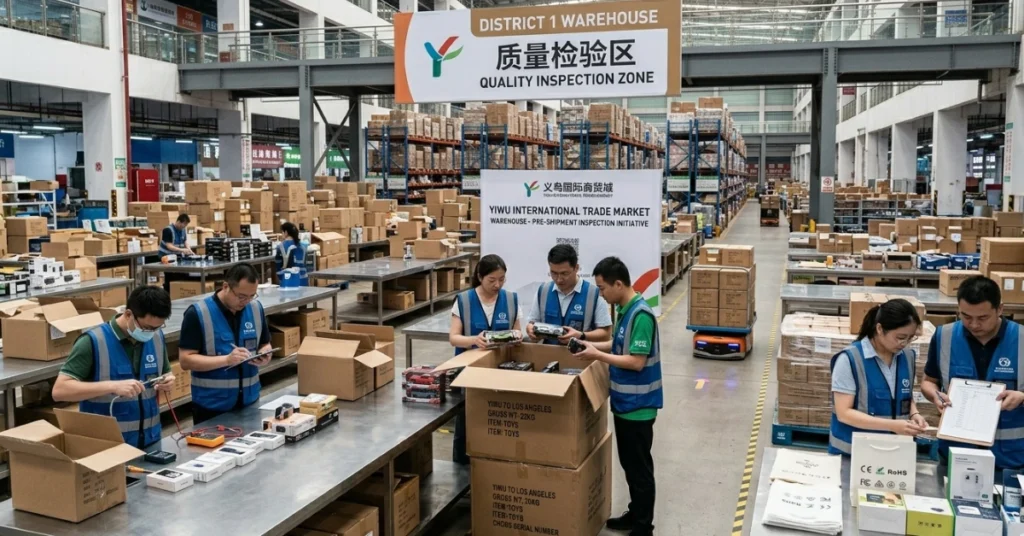
This is the Yiwu market problem that turns a mediocre buying trip into a full-blown disaster. Many buyers, especially those working remotely, skip the pre-shipment inspection step because it feels like an extra cost or an unnecessary delay. But when your bulk order arrives, and the products don’t match the approved sample, wrong colors, fragile packaging, or incorrect quantities, there’s no recourse once the shipment has left China.
Damaged packaging during transit, missing accessories, and product defects that weren’t caught before loading are all issues that a proper inspection would have flagged. Skipping inspection is one of the most preventable Yiwu market problems, and yet it remains one of the most common. The Quality Inspection Service handles on-site pre-shipment checks so problems get caught in China, not in your warehouse.
How to Avoid It
- Make pre-shipment inspection a non-negotiable step in every single order no exceptions.
- Use AQL (Acceptable Quality Level) inspection standards, which provide a statistical framework for checking batches without inspecting every unit individually.
- Inspect packaging, labeling, quantities, and product quality as separate checklist items.
- Hire a local inspection team or work with a sourcing agent who includes inspection as a core part of their service.
Ready to source from Yiwu without the headaches? Kingsler handles supplier verification, quality checks, logistics coordination, and shipping so you don’t have to figure it out alone .Get in touch with the Kingsler team today.
Real Example: Common Yiwu Buying Failure
Here’s a scenario that plays out more often than it should. A buyer visits Yiwu for the first time, gets excited by the scale of the market, and places orders with eight different suppliers across three days. The prices look good. The samples look decent. They pay deposits across the board and fly home.
Six weeks later, the goods arrive at their warehouse in three separate shipments. Two suppliers delivered products that don’t match the samples. One shipment has packaging that was crushed during transit. A fourth supplier is unresponsive. The combined result: mixed quality across SKUs, two partially unsellable batches, a significant delay to their launch date, and a customs broker bill they didn’t plan for.
What went wrong? No supplier verification. No inspection process. No consolidated shipment plan. These are exactly the issues in the Yiwu market buying that structured sourcing is designed to prevent. Every experienced importer knows that issues in the Yiwu market buying like these are predictable and each one was avoidable with the right process in place.
This example shows why approaching Yiwu sourcing problems with a clear system, not just enthusiasm, is what separates buyers who scale successfully from those who don’t come back for a second order. The Yiwu market problems in this scenario weren’t unlucky; they were unmanaged.
How to Avoid All Yiwu Market Problems
The good news is that every single one of the Yiwu market problems covered in this guide has a clear, actionable solution. Here’s what a smart sourcing process looks like in practice:
- Plan before visiting the market. Know which districts cover your product categories, prepare a supplier shortlist, and set a clear budget and specification sheet before you arrive. Walking into Yiwu without a plan is exactly how buyers spend three days wandering and placing orders with the wrong suppliers.
- Verify suppliers properly. Every supplier you consider should provide a valid business license, factory photos or video, and references from existing buyers. This step eliminates the most serious Yiwu supplier problems before money changes hands.
- Always inspect products. Pre-shipment inspection is not optional if you care about what arrives at your warehouse. Schedule inspections through a trusted agent and use AQL standards to guide the process consistently.
- Consolidate shipments. Coordinate with a consolidation warehouse so all goods move together in a single, cost-effective shipment. This reduces both freight costs and customs complexity significantly.
- Work with experts. If you’re navigating China sourcing risks in Yiwu for the first time or scaling up and wanting to reduce exposure, partnering with a professional sourcing agent saves time, money, and stress. The Yiwu Market Guide is a strong starting point for understanding how the market is structured and how to move through it efficiently.
How Kingsler Helps You Reduce Buying Risks
Kingsler is a Yiwu-based sourcing agent with over a decade of on-the-ground experience. Their team handles the exact parts of the sourcing process that generate the most Yiwu market problems for independent buyers, and they do it as a single coordinated service rather than a collection of disconnected fixes.
Supplier verification is done through physical factory visits, business license checks, and export history review, not just online searches. Price negotiation is handled by a local team that buys regularly across product categories, giving you the kind of leverage a first-time buyer simply cannot achieve alone. Quality inspection is conducted on-site before shipment, using structured AQL standards to catch defects, packaging issues, and specification mismatches before they become your problem. Logistics coordination covers everything from warehouse consolidation to freight booking and export documentation, so your goods move as a single, properly managed shipment.
Whether you’re a first-time importer or an established Amazon seller scaling your catalog, working with Kingsler removes the guesswork and eliminates most of the Yiwu sourcing problems that derail buyers who go it alone. The Yiwu wholesale market risks are manageable, but only when someone with real China sourcing risks Yiwu experience is actively handling them for you.
Final Thought
Yiwu is genuinely one of the best sourcing destinations in the world. The scale, variety, and pricing are hard to match anywhere else. But the Yiwu market problems covered in this guide are real, and they affect buyers at every experience level, not just beginners.
Understanding Yiwu market problems is the first step. The second is building a sourcing process that actually addresses them: verified suppliers, inspected goods, consolidated shipments, and expert guidance when you need it. According to China’s Ministry of Commerce, Yiwu is officially recognized as one of China’s key commodity export hubs, which means the opportunity is legitimate, but so is the need to approach it with a proper system.
Planning to source from Yiwu? Get expert guidance from Kingsler to avoid costly mistakes, verify suppliers properly, and ensure smooth importing from day one. Contact Kingsler today.
FAQs
What are the common problems in Yiwu Market?
Common challenges include inconsistent product quality, language barriers, hidden costs, fake certifications, delayed shipping, and suppliers acting as middlemen instead of manufacturers. Buyers may also struggle with negotiating MOQs (Minimum Order Quantities) and finding reliable suppliers among thousands of booths.
How do I avoid scams in Yiwu?
Always verify the supplier’s business license, avoid paying 100% upfront, request product samples before bulk orders, and use secure payment methods. Be cautious of prices that seem unrealistically low, as they often indicate poor quality or fraud.
Is Yiwu safe for sourcing?
Yes, Yiwu is generally considered safe and is one of the world’s largest wholesale trading hubs. However, like any major marketplace, buyers should perform due diligence, inspect products carefully, and work with trusted suppliers or sourcing professionals to reduce risks.
How to verify Yiwu suppliers?
Check the supplier’s business registration, export history, factory certifications, and customer reviews. Request video calls, factory photos, or third-party inspections before placing large orders. Visiting the factory or hiring a local inspection team can provide additional assurance.
Why is quality inconsistent in Yiwu Market?
Many suppliers source products from different factories, which can lead to variations in materials, finishing, and packaging. Without clear specifications and quality checks, repeat orders may not match initial samples.
Do I need a sourcing agent in Yiwu?
A sourcing agent can be very helpful, especially for first-time buyers. They assist with supplier verification, price negotiation, quality inspections, translation, consolidation, and shipping coordination. For experienced importers with established supplier relationships, an agent may be optional.