If you are importing goods from China, China shipping cost 2026 is one of the biggest factors that will directly affect your profit margins. A small change in freight rates can mean the difference between a healthy margin and a loss on your order. In 2026, the shipping market is shifting, driven by new vessel capacity, demand cycles, fuel price movements, and evolving global trade patterns.
Understanding China shipping cost 2026 helps importers plan smarter sourcing budgets, choose the right shipping method, and avoid expensive surprises. Whether you are moving machinery, consumer goods, or raw materials, this guide covers everything you need to know before your next shipment.
Overview of China Shipping Cost Trends in 2026
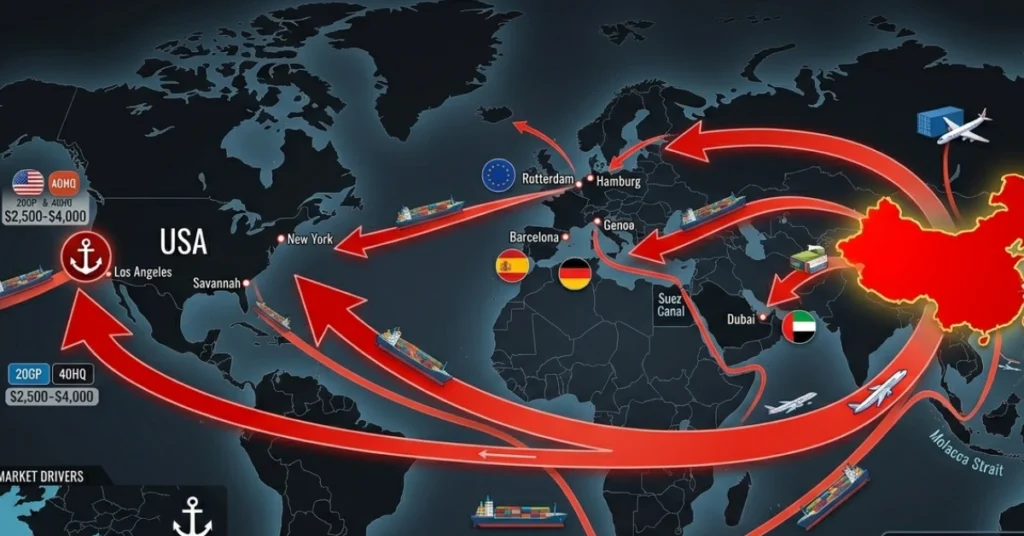
China shipping cost 2026 is expected to remain relatively stable but will fluctuate seasonally due to vessel capacity, fuel prices, and global demand shifts. The China shipping rates 2026 forecast shows a market that is not in crisis, but is not static either. Importers who plan around these seasonal patterns will have a clear advantage over those reacting at the last minute. Importers can review official international trade data to better understand global shipping patterns and market trends.
Key Market Drivers in 2026
- Vessel overcapacity: New ships entering the market are adding supply, which helps keep rates from spiking dramatically
- Seasonal demand peaks: Q3 and Q4 remain the most expensive periods to ship, driven by pre-holiday inventory builds
- Fuel price fluctuations: Bunker fuel costs impact freight surcharges directly and can shift rates quickly
- Geopolitical shipping routes: Route disruptions around key waterways continue to add unpredictability to transit times and overall China shipping cost 2026
Sea Freight Cost from China in 2026
Sea freight cost from China 2026 remains the most cost-effective shipping method for bulk cargo, machinery, and large commercial imports. If you are moving significant volume, ocean freight is almost always the right starting point when managing China shipping cost 2026. Ocean shipping remains the most widely used form of freight transport for bulk commercial imports from China.
Estimated Sea Freight Cost Forecast (2026)
| Route | 20ft Container (20GP) | 40ft Container (40HQ) |
| China – USA (West Coast) | $1,500 – $2,500 | $2,500 – $4,000 |
| China – USA (East Coast) | $2,000 – $3,200 | $3,500 – $5,500 |
| China – Europe | $1,200 – $2,800 | $2,200 – $4,500 |
| China – Middle East | $800 – $1,500 | $1,500 – $2,800 |
Note: Rates are estimated ranges and vary by carrier, season, and port of origin.
20ft Container (20GP) Cost Forecast
The 20GP is a practical option for smaller bulk shipments and medium-weight machinery. When looking at sea freight cost from China 2026, Asia routes remain on the lower end of the cost range. However, importers should expect a moderate price increase during peak shipping season, typically August through October, as demand from holiday inventory builds pushes rates up.
40ft Container (40HQ) Cost Forecast
The 40HQ is the most commonly used container for machinery imports. It offers more volume capacity and is well-suited for oversized or palletized goods. The container shipping price China USA 2026 for 40HQ units is expected to stay relatively stable, with only minor fluctuations tied to carrier capacity management and seasonal demand cycles.
Key Factors Affecting Sea Freight Cost
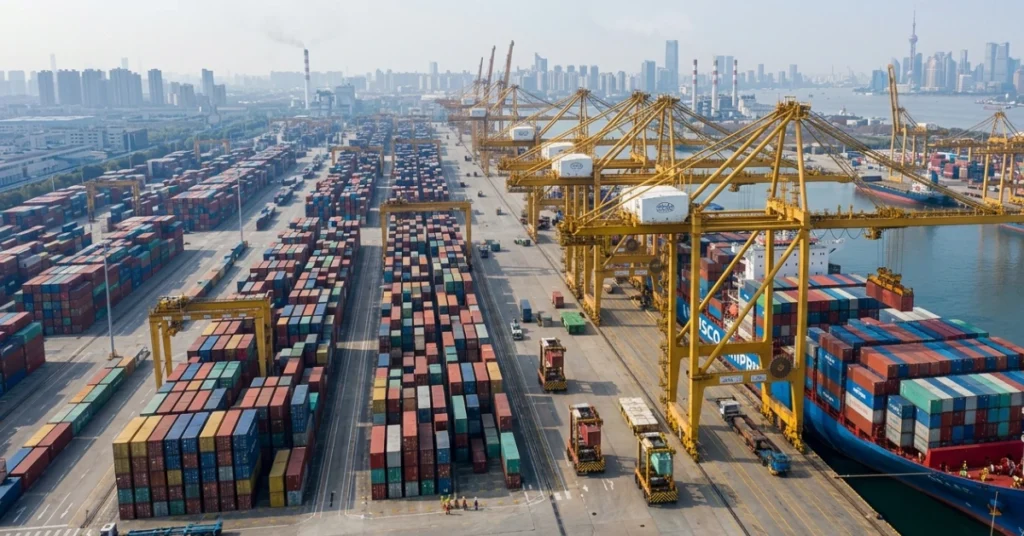
- Port congestion: Delays at major Chinese ports like Shanghai and Ningbo can push up costs and reduce available cargo space
- Shipping route: China–USA and China–Europe lanes carry the highest rates due to distance and demand volume
- Fuel surcharges: Applied on top of base freight and fluctuate with global oil prices, directly affecting sea freight cost from China 2026
- Container availability: Equipment shortages at origin ports can drive up costs during high-demand periods
Air Freight Cost China 2026
Air freight cost China 2026 remains significantly higher than sea freight, but is still the preferred option for urgent shipments, lightweight goods, and high-value products where speed matters more than cost. Understanding when air freight makes sense is an important part of managing your total China shipping cost 2026.
Estimated Air Freight Pricing in 2026
| Shipment Type | Estimated Cost |
| Small parcels (under 100kg) | $5 – $9 per kg |
| Mid-size shipments (100–500kg) | $4 – $7 per kg |
| Large air cargo (500kg+) | $3 – $6 per kg |
| Express courier (DHL/FedEx/UPS) | $8 – $15 per kg |
Note: Rates vary based on route, airline, and season.
Air Freight Pricing Factors
- Weight: Air freight cost China 2026 is billed by actual weight or volumetric weight, whichever is higher
- Route distance: Longer routes like China to South America or Africa carry higher base rates
- Fuel surcharges: Aviation fuel costs are a significant component of air freight pricing
- Seasonal demand spikes: Pre-Chinese New Year and Q4 holiday seasons push air rates up sharply due to limited cargo space
When to Use Air Freight
Air freight is not always about luxury or impatience; sometimes it is simply the smarter business decision. Use it for small shipments where ocean freight minimums make sea freight inefficient, urgent machinery parts needed to prevent a production shutdown, and high-value goods where the cost of delay outweighs the freight savings. When factoring in air freight cost China 2026, always weigh the cost of delay against the cost of flying your cargo.
China to USA Shipping Cost 2026 Forecast
China to USA shipping cost 2026 is expected to stay within a stable range, with slight increases during peak shipping seasons. The US remains China’s largest export market, and lanes are well-served by major carriers. For importers focused on the American market, understanding China to USA shipping cost 2026 is especially important for setting competitive landed cost targets. Understanding the latest trends in shipping from China logistic service helps importers estimate freight costs and choose the most cost-effective routes.
West Coast Routes (Los Angeles / Long Beach)
West Coast ports offer the fastest transit times from China, typically 14 to 18 days for ocean freight. Inland transportation costs from these ports are also lower for importers distributing across the western US. When reviewing container shipping price China USA 2026, West Coast routing consistently comes out as the more affordable option for buyers in California, Nevada, Arizona, or the Pacific Northwest.
East Coast Routes (New York / Savannah)
East Coast routing carries a higher China to USA shipping cost 2026 due to longer sailing distances, but it offers better distribution reach for importers supplying markets on the eastern seaboard. Ports like Savannah have become increasingly popular as alternatives to congested New York terminals, offering competitive handling times and strong rail connections inland.
China to Europe Shipping Cost 2026 Forecast
Transit times and costs from China to Europe in 2026 depend on the shipping method chosen, customs clearance speed, weather disruptions, and the destination country. The China shipping rates 2026 forecast for European routes shows stable but slightly elevated pricing compared to pre-2024 levels, largely due to ongoing routing adjustments around key shipping corridors.
Estimated Transit Time by Shipping Method
| Route | Sea Freight | Air Freight |
| China – North Europe (Rotterdam/Hamburg) | 25 – 32 days | 5 – 7 days |
| China – South Europe (Barcelona/Genoa) | 28 – 35 days | 5 – 8 days |
| China – UK | 26 – 33 days | 5 – 7 days |
| China – Eastern Europe | 30 – 38 days | 6 – 9 days |
Factors That Cause Delays
- Customs inspections: Random or thorough checks can add several days to clearance
- Port congestion: European ports like Rotterdam and Antwerp are prone to backlogs during peak periods
- Peak season overload: Carrier capacity tightens in Q3 and Q4, extending transit windows
- Weather disruptions: Winter conditions and storms can delay both port operations and inland delivery
- Holiday shutdowns in China: Chinese New Year causes significant pre and post-holiday shipping bottlenecks that directly impact China shipping cost 2026
Why Shipping Costs Fluctuate in 2026
China shipping cost 2026 fluctuates due to global demand shifts, vessel capacity imbalance, fuel prices, and seasonal trade cycles. No single factor drives rates on its own; it is usually a combination of forces hitting at the same time. The China shipping rates 2026 forecast points to continued volatility in specific corridors and seasons, even as the overall market remains more balanced than in previous years.
Main Reasons for Fluctuation
- Peak season surcharges: Carriers apply General Rate Increases (GRIs) ahead of high-demand periods, particularly before the US holiday season
- Carrier capacity control: Shipping lines manage blank sailings (cancelled departures) to keep supply tight and protect rates
- Global trade demand: Shifts in consumer spending, manufacturing output, and trade policy all feed into freight demand and influence China shipping cost 2026
- Port delays: Congestion at origin or destination ports reduces effective capacity and puts upward pressure on rates
Hidden Costs Importers Should Expect
Many importers focus on the base freight quote and overlook additional charges that can significantly increase their total China shipping cost 2026. Before finalizing your shipping budget, make sure you account for:
- Port handling charges: Fees charged at both origin and destination ports for loading, unloading, and terminal handling
- Customs clearance fees: Charges for documentation processing and customs broker services at the destination country
- Inland transportation costs: Moving goods from the port to your warehouse or distribution center adds directly to the total landed cost
- Insurance costs: Cargo insurance protects against loss or damage in transit and should never be skipped on high-value shipments
How to Reduce China Shipping Costs in 2026
Reducing China shipping cost 2026 is not just about finding the cheapest quote; it is about making smarter logistics decisions before your goods even leave the factory. Here are the most effective ways to lower your total landed cost. Working with an experienced China sourcing agent can help consolidate suppliers, negotiate better shipping rates, and reduce overall logistics costs.
Consolidation of Goods
If you are sourcing from multiple suppliers, combining their shipments into one container is one of the fastest ways to reduce your per-unit China shipping cost 2026. Instead of paying for several small shipments separately, you consolidate goods from multiple suppliers into a single container and split the freight cost across all products a simple move that can save hundreds of dollars per order.
Choose the Right Incoterm
The incoterm you agree on with your supplier directly affects who pays for what and where your cost responsibility begins. FOB (Free On Board) gives you control over shipping from the port of origin, which often leads to better rates when you work with your own freight forwarder. EXW (Ex Works) puts all logistics responsibility on you from the factory door useful when you have a reliable sourcing agent on the ground in China. Choosing the wrong incoterm is one of the fastest ways to inflate your China shipping cost 2026 without realizing it.
Use Reliable Freight Forwarders
Working with an experienced freight forwarder gives you access to better negotiation rates with carriers, stable shipping contracts that protect you from sudden rate spikes, and expert guidance on routing, documentation, and customs requirements, all of which keep your sea freight cost from China 2026 as low as possible.
Want to avoid unexpected shipping costs from China? Kingsler helps you choose the most cost-effective shipping method to reduce unnecessary logistics expenses before placing your order.
Real Example: Machinery Shipping Cost Breakdown
To put the numbers in perspective, here is a real-world example of how China shipping cost 2026 compares across methods for a single heavy machinery unit:
Product: 1 industrial machinery unit (approx. 800kg, 3 CBM)
| Shipping Method | Estimated Cost | Transit Time |
| Sea Freight (LCL) | $350 – $600 | 25 – 35 days |
| Sea Freight (FCL 20GP) | $1,500 – $2,500 | 20 – 30 days |
| Air Freight | $3,200 – $5,500 | 5 – 7 days |
The cost difference between sea and air freight for this single shipment can exceed $3,000. When the container shipping price China USA 2026 is this significant, sea freight is clearly the more profitable choice for non-urgent orders. For emergency replacement parts or time-sensitive production needs, the higher air freight cost China 2026 may be worth absorbing to protect your operations.
Role of Freight Forwarders in 2026 Shipping
A reliable freight forwarder is more than just a booking agent; they are a logistics partner who handles the complexity of international shipping, so you don’t have to. In 2026, working with the right forwarder is one of the best ways to actively manage and reduce your China shipping cost 2026.
A good freight forwarder will manage route selection to find the most efficient path from factory to destination, optimize shipping costs by matching your cargo to the best carrier and service level, handle customs clearance documentation at both origin and destination, and provide real-time tracking so you always know where your goods are and when to expect delivery.
Final Thought
China shipping cost 2026 remains stable but dynamic. Sea freight continues to offer the best cost efficiency for bulk and commercial imports, while air freight remains the go-to option when speed is the priority. Smart importers plan ahead, consolidating shipments, choosing the right incoterms, working with experienced freight partners, and budgeting for hidden costs before they appear on the invoice.
Whether you are focused on China to USA shipping cost 2026, European routes, or the Middle East, the fundamentals are the same: understand your options, know the market, and work with people who do this every day. A clear picture of the China shipping rates 2026 forecast is not just useful; it is the foundation of a profitable import strategy.
Planning imports from China? Contact Kingsler for expert shipping cost planning and logistics optimization support.
FAQs
What is the shipping cost from China in 2026?
China shipping costs in 2026 vary based on the shipping method, destination, cargo size, and season. Sea freight for a 20-foot container generally ranges from $1,500 to $2,500 to the U.S. West Coast, while air freight typically costs between $3 and $9 per kilogram depending on shipment volume and urgency.
Is sea freight cheaper than air freight in 2026?
Yes, sea freight remains significantly cheaper than air freight in 2026. It is the most cost-effective option for bulk cargo, machinery, and commercial imports, while air freight is better suited for urgent, lightweight, or high-value shipments where speed is critical.
Why do China shipping costs change?
Sea freight is usually the cheapest way to ship from China, especially when consolidating goods into a full container load (FCL) or shared container (LCL). Combining shipments from multiple suppliers can further reduce per-unit shipping costs.
How much is a 40ft container from China in 2026?
A 40-foot-high cube container from China to the United States is expected to cost between $2,500 and $5,500 in 2026, depending on the destination port, carrier, and time of year. Routes to Europe and the Middle East may have different pricing ranges.