
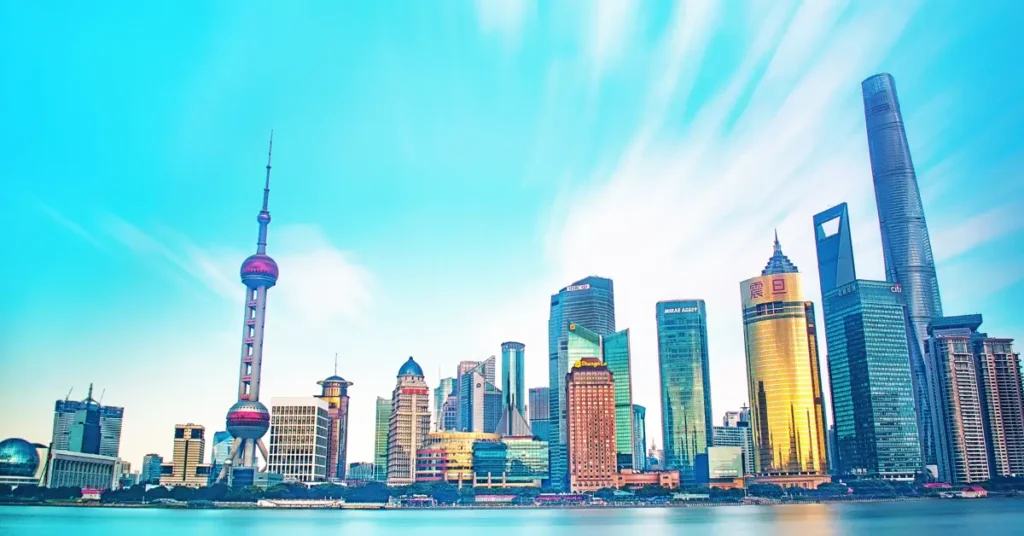
Shanghai is China’s largest city and its financial, cultural, and commercial capital, a place where colonial-era waterfront buildings sit directly across the river from some of the tallest skyscrapers on earth. It’s a city of contrasts: centuries-old gardens tucked behind glass towers, traditional teahouses a few blocks from Michelin-starred restaurants, and a business culture that moves faster than almost anywhere else in China.
This guide covers everything you need to know about Shanghai City in 2026, where it is, what it’s known for, its neighborhoods, food, culture, transport, and practical travel information, along with what the city offers specifically for buyers, importers, and business travelers.
Shanghai City at a Glance
| Stat | Detail |
| Population | Roughly 24.9 million (2020 census), density around 3,900 people per square kilometer |
| Total area | Around 6,341 square kilometers |
| Administrative divisions | 16 districts, including Huangpu, Jing’an, Pudong, Xuhui, and Changning |
| Status | A direct-administered municipality, on equal administrative footing with a province |
| Location | Yangtze River Delta, eastern China, on the coast |
| Coastline | Faces the East China Sea, with the Yangtze River meeting the sea just north of the city |
| Highest point | Dajinshan Island, about 103 meters above sea level, is otherwise very flat. |
| Language | Mandarin Chinese (official), Shanghainese (local dialect); English is more widely spoken here than in most Chinese cities. |
| Currency | Chinese Yuan (RMB/CNY) |
| Time zone | China Standard Time, UTC+8, is used year-round with no daylight saving. |
| Known for | The Bund, the Pudong skyline, soup dumplings, French Concession architecture, shopping, and its role as China’s financial capital |
Population density varies a lot across the city. Central districts like Hongkou pack in over 32,000 people per square kilometer, while outer districts like Jinshan sit closer to 1,400 per square kilometer. A large part of Shanghai’s total administrative area is suburban and rural, not just the dense urban core most people picture when they think of the city.
Shanghai’s History: From Treaty Port to Global Metropolis
Shanghai’s history sets it apart from most Chinese cities. It grew rapidly in the 19th and early 20th centuries as a treaty port, with British, French, and American concessions each leaving a distinct architectural and cultural imprint, which is why parts of the city still feel more European than Chinese. The Bund’s colonial-era banks and trading houses, and the tree-lined lanes of the French Concession, both date back to this period.
That history, layered with decades of rapid modern development since China’s economic reforms began in the late 20th century, is what gives Shanghai its signature mix of old and new. Areas that were fishing villages and marshland a century ago, like Pudong, are now home to some of the tallest buildings in the world, while pockets of the old city still preserve their original layout and character.
Where Is Shanghai City, and How Far Is It From Other Major Cities?
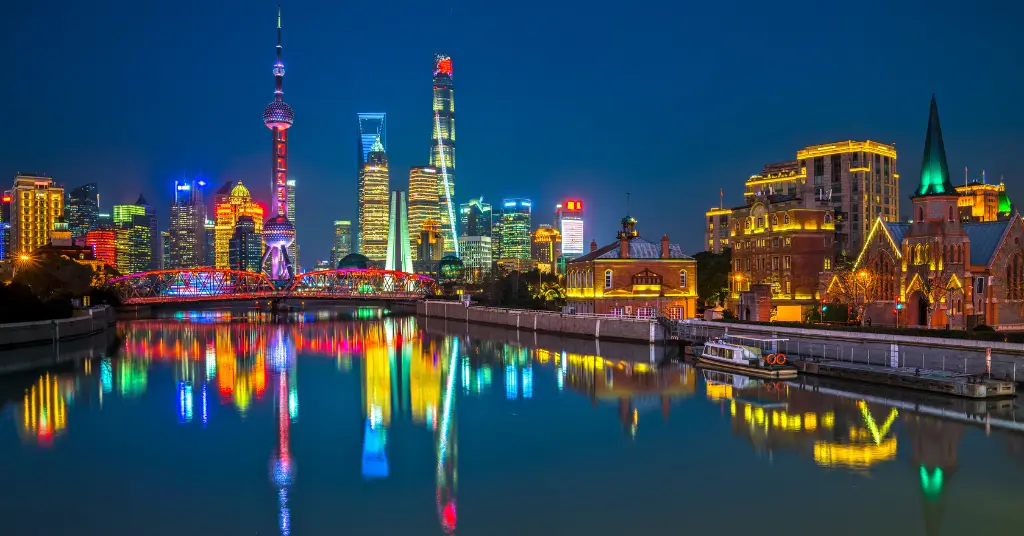
Shanghai City is a direct-administered municipality on China’s central-eastern coast, sitting at the mouth of the Yangtze River in the Yangtze River Delta, one of the most densely populated and economically important regions in the world.
Shanghai’s Distance From Other Chinese Cities
Once in the city, Shanghai City is well connected to the rest of China by an extensive high-speed rail network:
| City | Travel Time |
| Suzhou | Around 25 minutes by high-speed train |
| Hangzhou | Around 45 minutes by high-speed train |
| Nanjing | Around 1 hour 15 minutes by high-speed train |
| Yiwu | Around 1 hour 40 minutes by high-speed train |
| Ningbo | Around 2 hours by high-speed train |
| Beijing | Around 4.5 hours by high-speed train |
| Guangzhou | Around 8 hours by high-speed train, or roughly 2.5 hours by flight |
This makes Shanghai City a practical base for multi-city trips. Many visitors pair it with a day or two in Hangzhou or Suzhou, both under an hour away.
Getting to Shanghai City Internationally
Shanghai City is served by two airports. Pudong International Airport (PVG) handles the vast majority of international flights, with direct connections to most major global hubs: around 12 hours from London, roughly 14 to 15 hours from New York, about 6 to 7 hours from Delhi or Mumbai, and 3 to 5 hours from most Southeast Asian capitals. Hongqiao Airport (SHA) mainly serves domestic routes and connects directly to Hongqiao Railway Station.
Recommended Read: Yiwu City Guide
Things to Do in Shanghai City: Top Landmarks and Attractions
Shanghai’s attractions span everything from century-old colonial architecture to some of the tallest buildings on the planet, often just a short walk or metro ride apart. Here are the landmarks worth prioritizing on any first visit.
- The Bund: Shanghai’s iconic waterfront, lined with over 50 colonial-era buildings, offering classic views of the Pudong skyline across the Huangpu River, especially striking at dusk.
- Pudong Skyline and Shanghai Tower. Home to Shanghai’s tallest buildings, including the Shanghai Tower, one of the tallest in the world, plus the Shanghai World Financial Center and Oriental Pearl Tower, several have observation decks.
- Yu Garden. A classical Chinese garden dating back to the Ming Dynasty, with traditional pavilions, rock formations, and koi ponds, surrounded by the Yu Garden Bazaar for snacks and souvenirs.
- French Concession. A leafy historic district of tree-lined streets and colonial villas, with areas like Tianzifang and Xintiandi blending old shikumen architecture with modern shops and cafés.
- Jade Buddha Temple. An active Buddhist temple housing two jade Buddha statues brought from Myanmar in the 1880s, offering a peaceful break from the city’s pace.
- Nanjing Road: Shanghai’s main shopping street, running from the Bund to Jing’an Temple, split between a pedestrian tourist stretch and an upscale shopping district further west.
- Shanghai Museum. One of China’s best museums for Chinese art, ceramics, calligraphy, and bronze work, located in People’s Square.
Most of these sights sit within a few key districts, so it’s easy to group two or three into a single day without much backtracking. The next sections cover the neighborhoods around them in more detail, along with the best times to visit and how to get between them.
Shanghai City Food and Culture: What to Eat and Experience
Shanghai has its own distinct culinary identity, shaped by its coastal location and centuries as a trading port, and it’s noticeably different from the cuisine found in Beijing, Sichuan, or Guangdong.
What to Eat in Shanghai City
- Xiaolongbao. Shanghai’s signature dish, delicate steamed soup dumplings filled with pork and hot broth, is best eaten fresh with a light dip in vinegar and ginger.
- Shengjian bao. Pan-fried dumplings with a crisp bottom and juicy filling, a popular Shanghai breakfast item found at street stalls across the city.
- Hairy crab. A seasonal delicacy from the lakes around Shanghai, typically eaten in autumn and considered a local speciality worth planning a trip around.
- Red-braised pork (hongshao rou). A rich, sweet-savory braised pork dish and one of the defining flavors of Shanghainese home cooking.
- Scallion oil noodles (congyouban mian). A simple, deeply flavorful noodle dish tossed in fried scallion oil and soy sauce, a Shanghai comfort food staple.
- Shanghai breakfast street food. Beyond shengjian bao, a typical local breakfast includes youtiao (fried dough sticks), doujiang (soy milk), and rice porridge, sold from small stalls in most neighborhoods.
Tea Houses and Local Drinking Culture
Shanghai City has a long tradition of teahouses, particularly around the Old Town near Yu Garden, where visitors can try green tea, oolong, and pu’er in a traditional setting. Alongside this older tradition, the city also has a thriving modern café and cocktail bar scene, especially concentrated in the French Concession.
Arts, Music, and Festivals
Shanghai City has a jazz scene with roots going back to the 1930s, when the city was known as the “Paris of the East,” with several long-running jazz clubs still active today. The city also hosts major cultural events, including the Shanghai International Film Festival, and its acrobatics theaters, most notably the Shanghai Circus World, remain one of the most distinctly Chinese cultural experiences available in the city.
Where to Stay in Shanghai City: Best Neighborhoods for Visitors
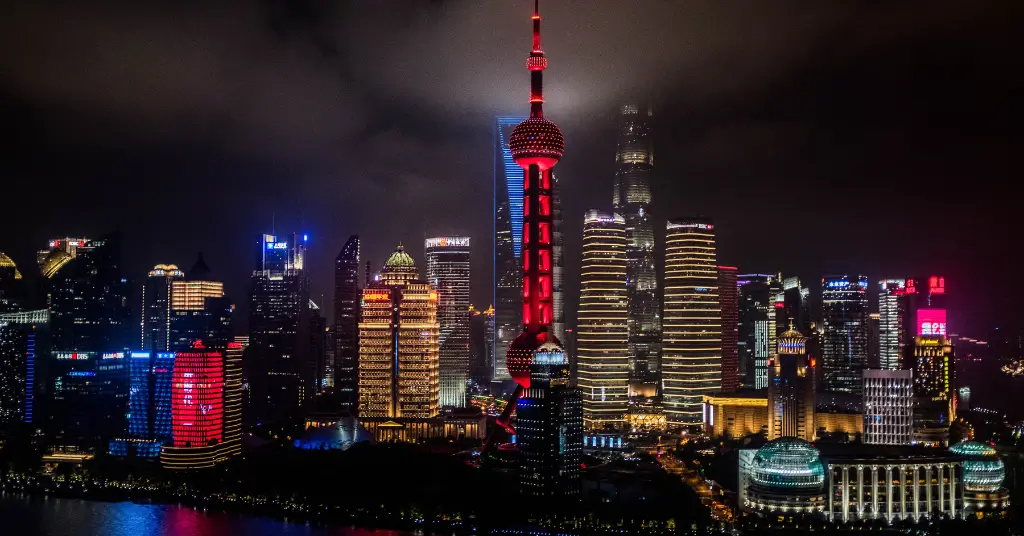
Shanghai City is a large city, and where you base yourself shapes your whole trip, from how close you are to the main sights to how much you’ll rely on the metro. Here’s a quick breakdown of the city’s key neighborhoods.
- The Bund / East Nanjing Road. Historic, central, and iconic, ideal for first-time visitors who want to be near the main sights.
- Pudong (Lujiazui). The modern financial district and skyline, Shanghai’s business and banking core.
- French Concession. Shanghai’s most character-filled neighborhood, known for architecture, dining, and nightlife.
- Jing’an. Upscale, central, and business-friendly, with strong shopping and hotel options.
- Old Town. Traditional and bustling, home to Yu Garden and the surrounding bazaar.
- Hongqiao. A fast-growing business hub built around the airport, railway station, and major trade fair venues.
First-time visitors and sightseers tend to do best around the Bund or French Concession, while business travelers usually find Pudong or Hongqiao more practical for meetings and transit. Buyers combining a Shanghai trip with Yiwu market sourcing often base themselves near Hongqiao for easier onward rail travel.
Planning to source products in Shanghai? Kingsler helps you with product sourcing in China, from finding reliable suppliers to managing the sourcing process.
Getting Around Shanghai City: Transport Options for Visitors
Shanghai City has one of the most extensive public transport networks in the world, making it easy to move between neighborhoods, meetings, or attractions in the same day.
- Metro: 20 lines covering more than 800 km, the longest metro system in the world by route length, with fares running roughly 3 to 9 RMB depending on distance.
- Maglev train. A magnetic levitation train connecting Longyang Road metro station to Pudong International Airport in around 8 minutes, reaching speeds of up to 430 km/h.
- Taxis and DiDi. Widely available and metered, DiDi (China’s equivalent of Uber) offers an English-language option and works reliably across the city.
- High-speed rail. Hongqiao Railway Station is one of China’s busiest HSR hubs, with fast connections to nearby cities.
- Walking and cycling. Areas like the Bund, French Concession, and Old Town are very walkable, and dockless bike-sharing apps like Mobike and Hellobike are widely used for short trips.
For most visitors, the metro covers the majority of day-to-day trips, with taxis or DiDi filling in for late nights or heavier luggage, and the maglev or high-speed rail reserved for airport transfers and side trips out of the city.
Best Time to Visit Shanghai: Weather, Seasons, and Best Months
Shanghai has four distinct seasons, and picking the right window makes a real difference to how comfortable your trip is.
- Spring (March to May). Mild and increasingly pleasant as the season progresses, with temperatures around 13 to 24°C. Early April brings cherry blossoms in parks across the city, though occasional rain showers are common, so it’s worth packing a light umbrella.
- Early summer plum rain season (mid-June to early July). A distinct rainy period locally known as meiyu, with frequent drizzle and high humidity. Not peak tourist season, but worth knowing about if your trip falls in this window.
- Summer (July to August). Hot and humid, often 30 to 35°C with high humidity, and occasionally affected by typhoons moving up the coast, which can bring heavy rain and travel disruptions for a day or two at a time.
- Autumn (September to November). Widely considered the best season to visit, with temperatures around 15 to 24°C, lower humidity, and clear skies, particularly from mid-October onward.
- Winter (December to February). Cold and damp, typically 0 to 8°C, though snow is rare and doesn’t tend to settle.
- National Day Golden Week (October 1 to 7). Falls right in the middle of the best autumn weather but brings very large domestic crowds and significantly higher hotel prices. Generally worth avoiding if your travel dates are flexible, even though the weather itself is ideal.
Overall, mid-to-late October and April to May offer the best combination of comfortable weather and manageable crowds.
Shanghai for Business Travelers and Importers
Shanghai plays a different role for business travelers than it does for tourists. Rather than being a wholesale-market city like Yiwu or Guangzhou, Shanghai is where China’s major trade fairs, corporate headquarters, and professional services are concentrated.
What Shanghai Is Strong For
Shanghai’s sourcing strength is concentrated in a few key categories.
- Automotive components. Home to SAIC Motor and a large cluster of tier-1 and tier-2 suppliers around Jiading and Anting, many producing tooling and precision parts for international buyers.
- Pharmaceuticals and chemical intermediates. Centered around the Zhangjiang Hi-Tech Park.
- Industrial and manufacturing equipment. A broad base of distributors and specialized manufacturers, including plastic injection molding capacity for custom parts.
- Design and branding services. A strong base of agencies serving international clients.
Many manufacturers based elsewhere in China also keep a Shanghai office or showroom for international clients.
Business Districts for Meetings
Several of these areas also double as good places to stay, covered in the Neighborhoods section above, but for meetings specifically, each district has its own focus.
- Lujiazui (Pudong). The hub for banking and corporate offices.
- Hongqiao. Best for trade fairs and rail access.
- Jing’an and Huangpu. Concentrate on professional services and client meetings.
- Zhangjiang. Covers tech and pharma.
- Jiading and Anting. The automotive cluster.
Shanghai Trade Fair Calendar: Key Exhibitions and Dates
Shanghai hosts more large, international-grade trade exhibitions than any other Chinese city. Key annual fairs include:
| Fair | Timing | Focus |
| China International Import Expo (CIIE) | November | China’s flagship import expo, strong for machinery and technology |
| China International Industry Fair (CIIF) | September | Robotics, automation, CNC machinery, industrial equipment |
| Intertextile Shanghai Apparel Fabrics | March and September | Fabric and apparel accessories |
| CPHI China | June | Pharmaceutical ingredients and machinery |
| Shanghai International Furniture Fair | September | Furniture and interiors |
| Automechanika Shanghai | December | Auto parts and aftermarket components |
Most fairs are held at either the Shanghai New International Expo Centre (SNIEC) in Pudong or the National Exhibition and Convention Center (NECC) in Hongqiao. The two are on opposite sides of the city, so it’s worth confirming the venue before booking a hotel.
Looking for suppliers while visiting Shanghai? Kingsler helps you connect with reliable suppliers and manage your product sourcing in China.
Shanghai vs. Yiwu: Which Should You Source From?
Buyers new to sourcing from China often have to choose between these two cities, and the right answer depends entirely on what you’re buying.
- Choose Yiwu if you need low-cost, low-MOQ small commodities across a wide range of categories and want to compare thousands of suppliers side by side in one location.
- Choose Shanghai if you’re attending a trade fair, sourcing higher-complexity products like automotive parts or pharmaceuticals, or need professional services such as legal review, quality inspection, or trade financing.
- Combine both if your sourcing needs span categories. The two cities are roughly 100 minutes apart by high-speed rail, making it practical to pair a Shanghai trade fair with a Yiwu wholesale trip in the same week.
Neither city replaces the other; they serve different types of product sourcing entirely, and most experienced buyers end up using both at different points depending on what they’re bringing into their catalog.
Essential Travel Tips for Visiting Shanghai City
A few practical things are worth knowing before you land, covering money, language, connectivity, and everyday etiquette.
- Accommodation. Shanghai is China’s most expensive city for hotels, roughly 300 to 500 RMB near Hongqiao, 600 to 1,200 RMB centrally, and 800 to 2,000+ RMB near Lujiazui or the Bund. Prices can double during trade fairs or Golden Week.
- Language. English is common in hotels and business settings, but not with taxi drivers or smaller shops, so keep your destination written in Chinese characters.
- Payments. Alipay and WeChat Pay are used almost everywhere. Link an international card before your trip, and carry a small amount of cash as backup.
- Internet. Google, Facebook, Instagram, and WhatsApp are blocked. Download and test a VPN before you arrive.
- Business etiquette. Present business cards with both hands, ideally printed in Chinese on one side. Punctuality matters, and dinner invitations after meetings are common.
- Safety. Shanghai has low violent crime, but stay alert for pickpocketing and common tourist scams like unsolicited tea ceremony invitations.
Small details, but they’re the difference between a smooth first day and a frustrating one.
Choose Kingsler as Your Shanghai Sourcing Partner
Kingsler is a China-based sourcing agency helping Amazon sellers, wholesalers, and brands source reliably from across China, including Shanghai and Yiwu. Instead of navigating suppliers and logistics alone, you work with a local team that knows the market and how to spot a trustworthy factory.
What Kingsler offers:
- Supplier sourcing and matching. Identifying and shortlisting suppliers based on your product specifications, budget, and order volume, across both wholesale markets and manufacturer networks.
- Factory verification. On-the-ground visits to confirm a supplier is legitimate, properly licensed, and capable of meeting your production requirements before you commit.
- Quality inspection. Checking goods against your specifications before shipment, so issues are caught at the factory rather than after your order arrives.
- Price negotiation. Using local market knowledge to negotiate fair pricing and terms, particularly useful for buyers unfamiliar with typical margins and MOQs.
- Logistics and shipping. Managing freight, customs documentation, and delivery from the factory floor to the final destination.
- Trade fair and sourcing trip support. Helping buyers plan itineraries, prioritize suppliers, and follow up on leads after events like CIIE or the Canton Fair.
Whether you’re sourcing through a Shanghai trade fair, Yiwu’s wholesale markets, or both, Kingsler handles the process end to end, so your trip builds lasting supplier relationships, not one-off deals.
Recommended Read: China Golden Week 2026
Final Thoughts
Shanghai is a city that works on more than one level. For a first-time visitor, it delivers everything a great city trip should: the Bund’s skyline views, Yu Garden’s quiet gardens, the energy of the French Concession, and a food scene that stands apart from the rest of China. For a business traveler or buyer, it plays a completely different role, home to the country’s biggest trade fairs, a strong base for automotive and pharmaceutical sourcing, and the professional infrastructure that makes negotiating and verifying suppliers easier than almost anywhere else in the country.
Whether your trip is built around sightseeing, a trade fair, or a full sourcing itinerary that pairs Shanghai with Yiwu, the details in this guide should make planning it considerably easier, from getting around the city to knowing the best season to travel.
Ready to turn your China sourcing trip into a long-term supplier relationship? Contact Kingsler for reliable sourcing support from start to finish.
Related Articles
140th Canton Fair 2026 / Canton Fair 2026 Phase 1 / Canton Fair Phase 2 / Canton Fair Phase 3 / Zhejiang Yiwu China / Yiwu Market vs Canton Fair / Canton Fair Mistakes / Yiwu Market Trends / China Golden Week 2026
Frequently Asked Questions
What is Shanghai best known for?
The Bund waterfront, the Pudong skyline, its role as China’s financial capital, soup dumplings (xiaolongbao), and the French Concession’s colonial-era architecture.
Is Shanghai a good city for wholesale sourcing?
Not primarily. Shanghai is stronger for trade fairs, corporate meetings, and higher-value manufacturing categories. For wholesale small commodities, Yiwu is generally the better choice.
What’s the best time of year to visit Shanghai?
October and April to May offer the most comfortable weather, and these months also line up with the city’s busiest trade fair season.
Do I need to speak Mandarin in Shanghai?
Not necessarily in hotels, international restaurants, or larger business settings, but Mandarin, or a translation app, is still useful for taxis, smaller shops, and day-to-day logistics.
What is Shanghai’s biggest trade fair?
The China International Import Expo (CIIE), held every November, is Shanghai’s flagship trade event and one of the largest import-focused expos in the world.
Is Shanghai safe for travelers?
Yes. Shanghai has low rates of violent crime, though it’s worth staying alert for pickpocketing in crowded areas and common tourist scams like unsolicited tea ceremony invitations.
Which airport should I fly into for Shanghai?
Pudong International Airport (PVG) handles most international flights, while Hongqiao Airport (SHA) mainly serves domestic routes and connects directly to Hongqiao Railway Station.
How do I get around Shanghai without a car?
The metro covers most of the city and is the fastest way to get around, with taxis or DiDi useful for late nights or heavier luggage, and the maglev train for quick airport transfers.