
A single slip-up kicks off most shipping troubles, mislabeling the HS code china export. That tiny paperwork glitch? It grows fast, snarling deliveries, piling on surprise fees, dragging profits down through fines no one saw coming, long before items arrive where they’re meant to go.
Most importers find knowing HS code china export surprisingly useful. Start off right by labeling goods properly, customs delays shrink, cost estimates stay reliable, and shipping flows more smoothly. Mistakes up front lead to fees later; clarity keeps everything on track. Understanding the HS code china export list helps you navigate the HS code China list effectively. You need to know how to find HS code China for your specific product. A proper China export HS code lookup saves time and money. Using an import duties China calculator gives you accurate landed costs. Always check the customs tariff China export before finalizing your shipment.
What Is an HS Code?
An HS code (Harmonized System code) is a standardized numerical system used worldwide to classify traded products and determine import duties and taxes. Developed and maintained by the World Customs Organization (WCO), it serves as a universal language for customs authorities, freight forwarders, and traders across more than 200 countries.
Structure of HS Code
Starting off, the HS code china export uses a worldwide 6-digit baseline. Its opening pair of numbers points to a chapter that thinks big-picture item type. Then come two more that narrow it down under a heading. That part sorts things into tighter clusters. After that, another duo pins the exact subheading. This last set defines the specific product group. Every nation using the Harmonized System keeps these initial six digits unchanged. Referencing the HS code China list helps you understand local variations.
Most nations build on the basis of six numbers, adding more to match their trade rules and duties. Take the U.S., where the system stretches into ten figures known as HTS codes. The EU takes another path, one that results in eight-digit CN labels. In China, exports run on eight digits, though imports there usually need two extra spots filled. Learning how to find HS code China is essential for accurate classification.
Why HS Codes Matter in China Export
Right on the mark with your HS code china export isn’t mere paperwork. Mistakes ripple through how smoothly things move for your operation.
Figuring out what you pay at Borders? That number comes from the HS code china export. Customs uses it first when setting fees for your goods. One item might fall under two separate categories. Depending on classification, charges could be light or heavy, five percent here, twenty-five there. Same thing shipped twice, totally different cost. A proper China export HS code lookup prevents these surprises.
Wrong label? That slows things down at the border check. Officials look up the HS number to know what steps come next for your goods. Mistakes here bring extra checks, piles of paperwork, or stuck shipments, holding everything back. If you are shipping from China, understanding how China customs clearance works end-to-end gives you a major advantage in avoiding these bottlenecks before they happen.
Compliance comes down to details. Some goods face limits when entering a country; rules about permits, licenses, or specific controls kick in. Using the proper HS code china export means the shipment follows paths meant for those rules. Routes adjust based on that number. Checking the customs tariff China export ensures you meet all requirements.
Avoid costly customs mistakes. Make sure your product is classified with the correct HS code before shipping.
How the HS Code Works in China Export
Exporting items from China means listing them properly using HS code china export. These numbers help sort products when paperwork goes to customs. The General Administration of Customs checks each shipment based on these classifications. Duties depend on the assigned code, so accuracy matters. Mistakes here can delay shipments or cause penalties. Every export form must include this key detail. Rules around global shipping rely heavily on correct coding. Officials use it to verify what leaves the country. Running an import duties China calculator helps estimate costs before shipping.
Role in Export Process
When sending goods abroad, the HS code china export shows up on documents like the invoice, packing details, shipping receipt, and customs paperwork. Customs in China checks this code to understand what items are being shipped, decide if taxes apply or if a value-added tax refund is due, plus see if licenses are needed because of trade rules. From the seller’s point of view, that same number influences whether they qualify for money back through China’s tax rebate system, something shaping how competitive their prices can be.
Role in the Import Country
When the package reaches the destination country, officials check the HS code china export on the shipping papers against local import rules. Because of this match, the assigned number sets how much tax applies to your items, along with extra fees like anti-dumping charges or penalties from trade disputes. It also shapes how value-added taxes are handled. Sometimes it decides if customs needs to examine the goods, ask for licenses, or manage them differently. Even if a code works fine in China, back home it might bring higher costs or stricter checks. Knowing how to find HS code China for your destination country prevents these issues.
How to Find the Correct HS Code
Start by looking at how your item is built, the material, shape, and function, and match those details to government categories. Not every step flows smoothly, yet moving through them one at a time helps avoid confusion. A careful eye makes the task simpler than it first appears. Learning how to find HS code China is the first step. Use the HS code China list as your reference guide.
Check Product Specifications
Out of everything, begin by looking at the actual item. Depending on its makeup, like whether it’s built from wood, plastic, or steel, the category shifts noticeably. Function plays just as big a role; something meant to entertain might shift into another group if it lights up or connects online. Picture a children’s game with circuits inside it, which could be used in electronics instead. Details matter most, so get hold of every page describing how it works prior to deciding where it fits.
Use Official HS Code Databases
Start by checking government customs sites, which post tariff details along with tools to classify goods. Over in China, the GACC site holds the approved hs code china export codes for exports. Your destination market matters; go through the proper channel, like the U.S. International Trade Commission, if you’re dealing with HTS numbers. If it’s Europe, tap into the TARIC system instead. Otherwise, find your nation’s own customs platform online. Never skip these sources. They carry real weight. Always begin right there. A proper China export HS code lookup uses only official databases.
Consult Suppliers or Experts
Now here’s something to consider, the factory or vendor in China might list an HS code china export for your item. Helpful? Yes. But relying on it without checking can backfire, especially since misclassification happens more than you’d think. People who ship goods often, particularly those focused on items like yours, tend to know the ins and outs of customs paperwork. They’ve seen how similar things get labeled depending on where they’re headed. That kind of hands-on insight matters when rules aren’t clear-cut. Understanding how to find HS code China includes asking the right experts.
Use HS Code Tools
Start typing what the item does, and some web tools turn that into likely HS numbers. Try searching through the WCO list, or peek at Flexport’s finder, even Customs Info gives clues. One thing, though, these only point you close. Always line up what they show with your country’s real database before deciding. Cross-reference with the HS code China list for accuracy.
Import Duties Explained
Import duties are taxes imposed on goods entering a country, calculated based on the product’s HS code china export, value, and destination country regulations. They are the primary mechanism through which governments regulate trade, protect domestic industries, and generate revenue from cross-border commerce. Using an import duties China calculator gives you a reliable estimate before you ship. For a broader overview of how tariffs function across global trade, the World Trade Organization’s tariff analysis resources offer authoritative reference material.
Types of Duties
Out of every shipment, one faces basic customs duty, a fixed charge tied to the item’s HS code china export, plus how the two countries trade. When nations treat each other as top-tier partners, MFN rules step in. Free deals? They sometimes lower what’s owed, depending on who’s sending and receiving.
Most nations add VAT or GST after collecting customs fees. Take the EU: there, import tax builds on both the product’s worth and the duties owed. Twenty percent sticks as Britain’s usual rate. Down under, Australia sets its goods-and-services tax at ten. Many forget this extra layer when tallying final shipping expenses.
On certain items, extra charges can pop up based on what’s being traded and how nations are getting along. One big case lately? U.S. penalties slapped onto loads of imports from China thanks to rules under Section 301, tacking anywhere from 7.5% up to 25% beyond regular base rates, depending on the type. Review the customs tariff China export to identify any additional tariffs.
How Duties Are Calculated
Shipping fees are usually built from the CIF value, that is, what the items cost, along with transport and coverage up to arrival at the harbor. Multiply that full amount by the set tax percentage, and out comes how much must be paid to customs. Afterward, sales tax kicks in, figured on top of both the original shipment value and the newly added duty. Getting clear on these numbers early helps nail down exactly what a purchase will truly run when it lands. An import duties China calculator simplifies this entire process.
HS Code China Export Sample
A good way to see how it works? Try looking at an everyday item that most people know. Take one typical type of product that many buy regularly. See how the idea applies there instead of just talking about it.
Product: Plastic Toy (Non-electronic, For Children Aged 3 and Above)
Example Breakdown
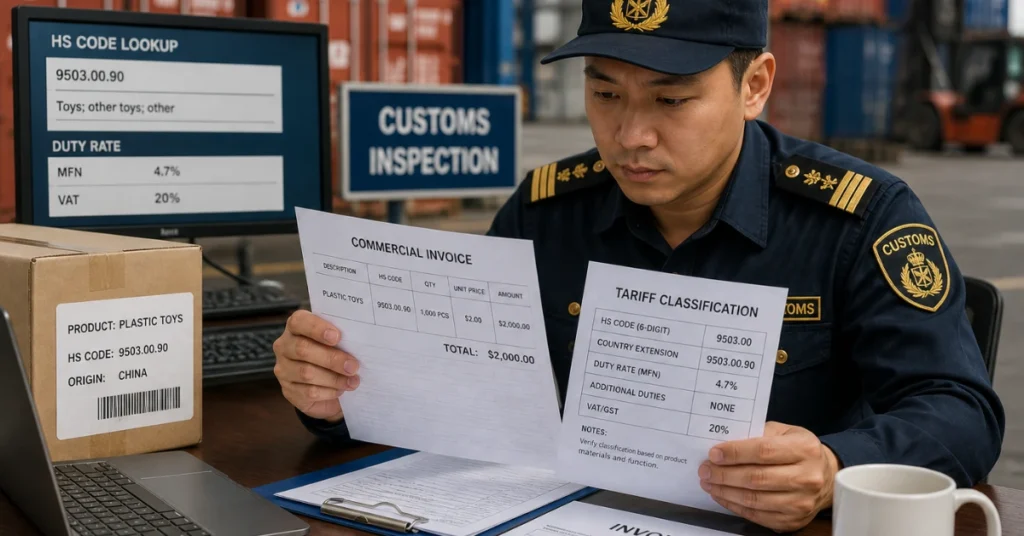
A plastic plaything meant for kids fits into category 9503.00 of the tariff list, tucked inside Chapter 95 that handles fun items and gear for games or movement. This spot includes ride-on toys like trikes and foot-powered vehicles, along with pretend creatures, building kits, plus imitation babies made of molded material.
Most of the time, it falls under HS code china export 9503.00.90, though some countries might need a longer version with ten digits instead.
- Some plastic toys made in China face extra U.S. tariffs under Section 301, typically 7.5%. For these items, the usual MFN rate often sits at zero. So if a batch arrives worth $10,000 CIF, it might rack up $750 just from that added levy. On top of that, there are still entry handling costs to cover.
Most toys entering the European Union face a 4.7% import tax. On top of that, buyers pay 20% VAT calculated after the tariff is added.
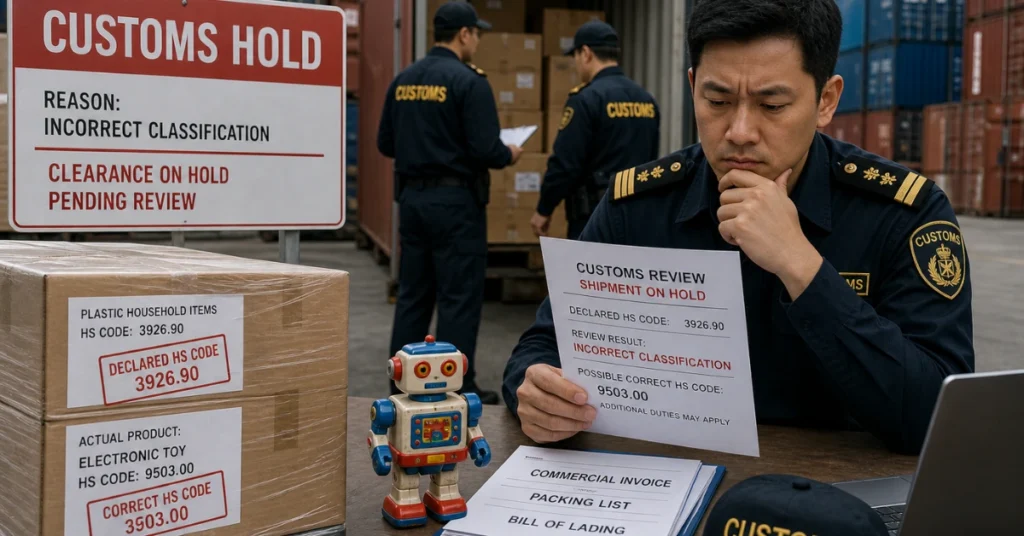
- Picture this toy landing in the wrong category, maybe labeled as sports gear or some plastic kitchen thing. That mix-up shifts everything: how much tax it pays, what rules apply, even how it clears customs. One small paperwork error like that might add up to big money fast. Hundreds, maybe more, lost on just one delivery. Costs pile up without warning. Always verify using the HS code China list before shipping.
Common HS Code Mistakes
Some seasoned importers still stumble here. Spotting the risks early changes everything.
Wrong category picked. Happens if someone goes by how it looks instead of what it does, or just picks a similar-sounding number without checking the real list.
Blindly copying the supplier’s code causes issues. Chinese suppliers assign HS code china export based on their own export needs. Your country’s import classification might differ completely. Just because it works there does not mean it fits here. That export number? It only serves as a starting idea. A proper China export HS code lookup should always be independent.
Most nations tweak the basic 6-digit system. That worldwide number? It’s only step one. Where you ship to adds extra digits. Each nation sets its own rates using longer versions. Check what your target country actually uses down to every digit. Consulting the customs tariff China export helps you avoid this mistake.
Calling something cheaper than it really is. Not exactly the same thing, yet tied closely. Officials base import fees on what you say an item costs; saying it’s less means breaking rules. It might seem like a small shortcut, but getting caught during checks or reviews brings serious consequences. What feels like saving now could mean penalties later.
Consequences of Incorrect HS Code
Mistakes with the HS code china export can cause problems that stretch from minor hassles to serious penalties.
- Delays happen when wrong codes set off extra checks by customs. Paperwork piles up instead of moving forward. Days turn into weeks once the rush hits or traffic backs up at major hubs.
- Fines might happen. If something gets declared wrong, even by mistake, many nations let customs slap a fee on it. When slipups stack up, expect closer looks every time stuff ships later.
- Should the proper classification demand more tax, repayment follows. When a misdeclared item falls under a costlier category, cash flows backward interest piles on top. Mistakes like these sometimes bring extra fees, too.
- When things go wrong, shipments can be turned away. If banned items are found, authorities might block them completely, sending cargo back, or wiping it out costs fall on the buyer.
HS Code vs Tariff Code
One term gets swapped for the other a lot, yet they’re not quite the same; spotting the difference matters more than it first seems. Worldwide, the HS code china export ties into a system run by the WCO. Every nation uses identical numbers across the opening six positions. That shared segment? It’s what most people mean when naming an HS code.
Most nations build on the basic HS code china export by adding extra numbers. That extended version becomes their own tariff classification. Instead of stopping at six digits, they go further, matching rules unique to them. These added figures account for local taxes, data needs, and policies around imports. So when working out fees or sending paperwork to customs, reach for the complete national code. The standard six-digit part alone won’t be enough. Full accuracy depends on using the longer form tied to the destination. Always reference the customs tariff China export for the complete number.
Role of Freight Forwarders and Customs Brokers
Finding your way through global shipping rules? That’s where freight forwarders come in, handling paperwork across borders. Customs brokers do something similar; they make sure goods pass inspections without delays. Both deal with red tape, so shipments keep moving. Rules differ by country, yet these experts know how to adapt. One mistake might cause holdups, which is why specialists step in early.
Someone who knows freight or customs can guide you through sorting products properly, using details about what you’re shipping to find the right HS code china export. Because they check each item carefully, mistakes become less likely. Paperwork like export forms, invoices showing value, how things are packed, and proof of where items were made gets handled for you. At arrival points, these experts step in to talk with officials so shipments move without delays. Their experience keeps expensive missteps around wrong labels far away from your business. Fewer hiccups happen when skilled people take charge of this part. They know how to find HS code China better than most.
Role of a Yiwu Sourcing Agent
When moving products from Yiwu or other parts of China, help appears just when needed. Instead of guessing, a local person jumps into the HS code china export setup and customs tasks. With your documents already in motion, they slide into spots that could slip through cracks. Errors tend to shrink because someone watches the details without slowing things down.
One look at your item, then a precise HS code china export gets picked. Rather than assume anything, questions go straight to suppliers for clarity. Paperwork fits together right because checks happen ahead of shipping. Handling many vendors? Each detail stacks neatly, avoiding coding errors or invoice mismatches.
Most of the time, these folks talk regularly with shipping crews and keep track of border rules. Because of that, items travel smoothly from maker to port. When hiccups show up, they catch them long before trucks roll, cutting expenses and sidestepping holdups.
Hidden in the rhythm of Yiwu trade, Kingsler moves behind the scenes among factories, shipping handlers, and border checks. Accuracy in labeling goods matters most to them, along with steady paperwork, yet decisions still rest with you. While others rush deals, they stay out of sight, making sure forms pass cleanly through each checkpoint. Control isn’t seized; it’s supported from a distance. Behind every shipment, their quiet presence keeps things moving without noise or fuss. They rely on the HS code China list and perform a thorough China export HS code lookup for every client.
Avoid delays, fines, and unexpected costs; get expert help from Kingsler to classify your products and manage customs properly.
Best Practices for HS Code and Duties
Start by reviewing how goods are categorized. Always compare the assigned HS code china export using more than one reference point; try pairing an official trade portal with advice from someone trained in customs rules.
- Start with trusted government websites. While web apps can help spot trends early, nothing replaces the actual import code published by the destination nation when checking taxes and rules. Official publications hold the final word on what applies. Use the customs tariff China export as your primary source.
- Start by checking what the importing nation requires. One item might fall under different categories depending on where it lands. Instead of relying only on China’s export label, look up the correct tariff number used at the final stop. Each place sets its own rules, make sure you have the right one. Knowing how to find HS code China for each destination is critical.
- Start by mapping out what needs to be done ahead of time. Before sealing any order, work out duty estimates within your total cost review. Getting caught off guard during customs hits harder than including expected fees early on. When you bake those numbers in up front, the whole process runs smoother. An import duties China calculator makes this easy.
Quick Checklist for Buyers
Got your stuff heading out of China? Run it past this list first
- Start by checking what your product is made of. Look into how it works, step by step. What’s it actually used for? Figure that out clearly. Dig up any official labels or approvals tied to it. Pull together every bit of paperwork showing it meets the required rules.
- Start by checking the HS code china export. Look up your item using trusted government sources instead of guessing. Match it carefully to the complete tariff number required, where it’s headed, and go beyond the first six digits. Accuracy here avoids delays later on. Perform a China export HS code lookup using official channels.
- Start by guessing what you might owe. Figure out how much you could pay once you know the cost of shipping and insurance, plus the item’s price, then check which tax rules fit, maybe special fees like Section 301 or penalties for underpriced imports show up too. Run an import duties China calculator before finalizing.
- Start by getting paperwork in order. Double-check every detail on the commercial invoice, then move to the packing list and match numbers carefully. The bill of lading must line up exactly with those two.
Missing data? That slows everything down. Certificates like proof of origin or lab results need full attention, too. One mismatch causes delays. Accuracy matters most when shipping begins.
Final Takeaway
More than a checkbox, the HS code china export shapes what you owe at borders. Because it sets duties, delays, or ensures a smooth passage through inspections. When wrong, shipments stall under review. Its accuracy quietly controls both expense and entry speed. Every border move ties back to this classification. Consult the HS code China list and customs tariff China export regularly.
A wrong label might set off a chain reaction delays creep in, fines pile up, expenses rise without warning, shaking the foundation of your shipment’s budget. Getting the HS code china export right when sending goods from China keeps transit moving, spending clearer, grip tighter across every leg of the journey.
Ready to import without customs issues? Get expert support for HS code classification and duty planning today. Contact us today!
FAQs
What’s an HS code in China export?
It’s the number Chinese customs use to track your shit. Determines your VAT rebate and how the destination country treats it.
How do I find the right HS code?
Get your product specs. Check the importing country’s tariff database. Look at your supplier’s code for clues. Then confirm with a freight forwarder or broker. Don’t guess.
How are import duties calculated?
CIF value (goods + freight + insurance) × duty rate for that HS code. Then add extra tariffs and VAT/GST on top. Simple math, painful tax.
What happens if HS code is wrong?
If HS code is wrong, then you will experience delays, fines, and more custom duties. Your shipment gets rejected and you get flagged for life for customs. Even honest mistakes hurt.
Can I rely on supplier HS code?
Suppliers’ code for export, not for your import tariff rules. Use theirs as a hint, then verify yourself or pay a pro.